

The Accidental IT Person Problem in Small Architecture, Engineering and Construction Firms
Someone on staff became the default tech person by accident. Now firm IT runs on their free time and Google searches. This is what it costs and what to do instead.
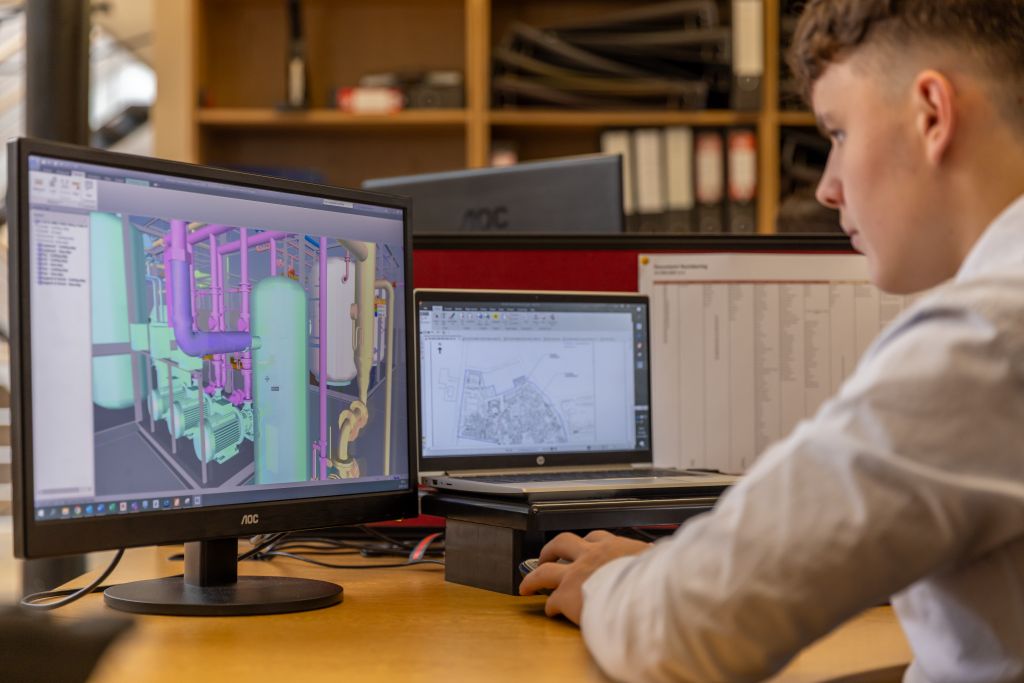
It usually starts small. The office Wi-Fi drops, and one person knows how to fix it. A printer jams, and they clear it. A new laptop shows up, and they set it up. Nobody picked them for the job. They were just good with computers. Now they are the IT person, and it was never their idea.
Maybe that person is you. Maybe it is a project manager, a designer, or the owner. Either way, the title came by accident. And the work keeps growing.
Here is the short version. In a lot of small architecture and engineering firms, one staff member becomes the unofficial IT person by accident. They keep things running on their free time and a few Google searches. That works until it does not. The hidden cost is their real job, the gaps in security and backups, and the risk that everything they know walks out the door when they do. The fix is to take IT off one person’s plate and hand it to a team whose actual job is IT, so your staff can focus on the work, not the technology.
Here is why it happens, what it really costs, and what to do instead.
How the accidental IT person gets the job
Nobody hands out this title. It builds up one favor at a time.
For example, let’s say your firm hires a sharp young engineer. She is fast on the computer. One day the plotter stops working, and she fixes it in five minutes. Word gets around. Now when anything breaks, people walk to her desk. Six months later she is resetting passwords, fighting with Revit, and ordering laptops. None of that is in her job description.
This is what we call the accidental IT person. Not a hired technician. Not a planned role. Just the person who happened to be good with computers and could not say no.
Here is what it is not. It is not a knock on that person. They are usually smart, helpful, and willing. That is exactly why it lands on them. The problem is not the person. The problem is the setup.
You should not make your best designer your worst-paid IT tech.
Why this is so common in design firms
Small architecture and engineering firms run lean. Every seat is billable. Hiring a full-time IT person feels like a luxury when you have ten or fifteen people.
So the work gets absorbed. The firm leans on whoever is closest. And the software these firms run is heavy. Revit, AutoCAD, Civil 3D, big BIM models, large file shares. When that stack breaks, it is not a quick fix. It is a deep one.
That is the trap. The tools are complex, the stakes are high, and the person handling them is doing it between deadlines.
What it actually costs you
It looks free. One of your own people handles it, so there is no invoice. But it is not free. You are just paying in ways that do not show up on a bill.
You lose their real work. Every hour your engineer spends on a printer is an hour she is not designing. That is billable time, gone. For example, let’s say she spends five hours a week on IT. At a firm rate, that is real money every month, and it never shows up as an IT cost. It shows up as a missed deadline.
The fixes are slow and reactive. Your accidental IT person waits for things to break, then scrambles. There is no one watching the systems in the background. Proactive is better than reactive. A real IT team can catch the failing hard drive before it dies. Your busy designer catches it after.
Security gets thin. This is the scary one. CISA, the federal cybersecurity agency, says small firms should have someone making sure the basics are covered: strong passwords, multifactor authentication (MFA, a second step to log in beyond a password), training, and backups. CISA even notes that person does not have to be an IT expert. But they do have to actually do it. An accidental IT person, buried in their day job, almost never has time. So MFA never gets turned on. Backups never get tested. The door stays unlocked.
The risk is real, not theoretical. A civil engineering firm close to us was hit by ransomware. It was down for three or four days. That is three or four days of a whole firm not working. When IT runs on someone’s spare time, that is the kind of bad day you are exposed to. Downtime is expensive once you count lost billable work, recovery, and overtime. You do not want to learn your number the hard way. Our free Downtime Cost Calculator helps you work it out ahead of time.
Everything lives in one head. This is the quiet risk. Your accidental IT person knows the passwords, the server, the quirks of the network. None of it is written down. For example, let’s say they leave, or just go on vacation when something breaks. Now nobody knows how anything works. The knowledge walks out the door with them.

“But we have someone, and they do a good job”
You might be thinking your person handles it fine. That is fair. Having someone who steps up is important, and we are glad your firm has that person. They have probably saved you more than a few bad days.
Here is the honest question. Is that the best use of them? And what happens when the problem is bigger than a Google search can solve?
We get that there is an emotional side too. This person has been your safety net. It can feel like a demotion to take it off their plate, or like you are saying they were not good enough. That is not it at all. You are giving them their real job back. The one you hired them for. The one they are great at.
You should not make your best designer your worst-paid IT tech. And you should not make your one helpful person the single point of failure for your whole firm.
What to do instead
The goal is simple. Take IT off the accidental person and give it to people whose actual job is IT. Here is what that looks like.
Name the role honestly. First, admit the job exists. Someone is doing IT at your firm right now. Once you see it as a real job, you can decide who should actually do it.
Get the basics covered by someone watching full time. A managed service provider (an MSP, an outside company that runs your IT for a flat monthly fee) watches your systems in the background. They patch the software, run and test the backups, turn on MFA, and answer the help desk when something breaks. This is the proactive part. Problems get caught before they become a bad day.
Write down what lives in one head. Passwords, network setup, how the server is built, which vendor handles what. It should all be documented and held by the firm, not trapped in one person’s memory.
Free your person up. Your in-house helper does not disappear. They become the friendly link to your IT team, and they get to spend the rest of their time on the work they were hired for. So they can focus on the projects, not the printers.
You are a small fish in a big pond. Larger firms have an IT department. You do not have to. You just need a team in your corner, so the technology works and your people do the work they are good at.
Frequently asked questions
Take IT off one person’s plate
Your firm already has an IT person. They just never signed up for it, and they are doing it between deadlines. That is a risk to your work, your security, and that person’s real job.
Our managed IT services help small architecture and engineering firms turn that accidental setup into a real one. Based in East Tennessee. Serving firms nationwide. We watch your systems, cover the basics, write down what lives in one head, and answer the phone when something breaks. If you want to see what that person is protecting, read our post on former employees who still have access and our post on testing your backups. So your team can focus on the work, not the technology.
If one of your people has quietly become the IT person, give us a call for a free IT checkup. We will tell you straight what they are carrying and how to take it off their plate.
Key takeaways
- In many small design firms, one person becomes the IT person by accident. They keep things running on free time and Google searches, and the firm pays for it in missed billable work.
- The hidden costs are real: slow reactive fixes, thin security with no MFA or tested backups, and all the firm’s tech knowledge trapped in one head that can walk out the door.
- The fix is to hand IT to a team whose actual job is IT. Your helpful staff member gets their real role back, and the firm stops being one sick day away from chaos.
Has someone at your firm quietly become the IT person?
A free 30-minute IT review shows you what one person is really carrying, and how to take it off their plate. No obligation, no sales pitch.
Sources: CISA: Cyber Guidance for Small Businesses, CISA: Secure Your Business, Verizon: 2026 Data Breach Investigations Report





One Comment