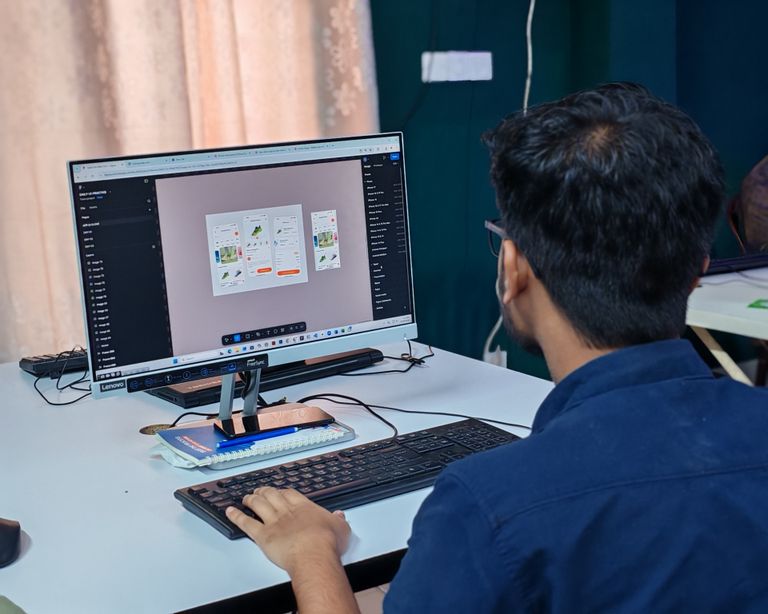

Field Access to Project Files: Tablets, Phones, and What Actually Works
Your superintendent is on the phone asking for the latest plans. Somebody emails a PDF, the foreman is still building off Friday’s printed set, and nobody on the job is sure which drawings are current.

It is a common way for real, expensive mistakes to start. Getting the right drawings onto a tablet sounds simple. It is messier than it looks. Here is what actually works.
Here is the short version. Field staff need the current drawings on a tablet or phone. Emailing files around creates version chaos. Running a VPN from a tablet into your office file server is slow and gives a lost device too much reach. What works is publishing drawings to one cloud place built for the field, then letting the field pull from it. Add real logins with MFA and a managed work area you can wipe. Keep the stamped permit set on site if your building department still requires it. And keep issuing revisions through your normal transmittal process, because publishing a sheet is not the same as issuing it.
Why “just email it” fails
Emailing drawings feels natural. It is the default at a lot of firms. It also causes the biggest problem on the job: nobody knows which set is current.
Here is the chaos it creates. The project manager has the latest set on a laptop. The superintendent downloaded last week’s version to a tablet. The foreman is working off PDFs texted on Friday afternoon. Three people, three different “latest” sets, all building the same thing. That is how a wall gets framed off an old drawing and has to come down.
On top of the version mess, the files are big, email chokes on them, markups never come back, and project data scatters across personal inboxes. Emailing is fast to do and slow to regret.
But be honest about the cause. Email is the symptom. The real problem is that nobody owns the current set. A firm that buys new software and keeps the same habits ends up with three “current” sets inside the new software.
That is the whole game in construction: one current set, everywhere.
Why VPN to the server is the wrong tool here
The other instinct is to let the field reach the office server with a VPN (a private tunnel into your network).
VPN is not bad technology. Plenty of firms run one safely with MFA turned on, and CISA publishes guidance on how to harden it. It is just the wrong tool for this job. A tablet on cellular pulling a 200 MB sheet set across a tunnel is painfully slow. It is the same problem heavy files have over any remote connection, which we cover in our post on why Revit feels broken from home.
The security issue is narrower than “VPNs are unsafe.” A VPN drops that tablet onto your network. Lose the tablet in a gravel lot and whoever finds it has a door into your file server. You want the field to reach drawings, not your whole server.
What actually works: publish to one place
Instead of pushing files out to the field, put the current drawings in one cloud place and let the field pull from it.
That cloud location becomes the single source of truth. The office publishes the current set. The field app on every tablet reads from that same place. Everyone sees the same version. Good systems track versions for you, let crews zoom and mark up on the device, and sync those markups back.
For example, let’s say a sheet gets revised. You publish the new version. The next time each tablet syncs, it shows the new sheet with the old one marked superseded.
One catch worth knowing. Offline access is real, but it is not magic. With both Procore and Forma Build, you need to download the sheets you need while you still have signal. Procore’s own support docs say work done offline does not reach anyone else until that device reconnects and syncs. So tell your crews: sync in the morning at the trailer, sync again before you leave. Do not assume.
And do not tell yourself the software makes mistakes impossible. A foreman can still build off an old sheet if his tablet never synced, or if someone texted him a PDF, or if he is standing at the plan table. Version control is a habit people keep. The software just makes the habit easier to keep.

Publishing is not issuing
This part is easy to miss, and it is the part that costs money.
Dropping a revised sheet into a cloud folder is delivery. It is not a formal issue. Revisions still go out the way your contract says they do, as an ASI, a bulletin, or an RFI response, with a transmittal record showing who got what and when.
Here is why it matters. If a sub builds off a sheet that quietly appeared on a tablet but was never formally issued, the fight over who pays for the rework is real. The cloud is how the drawing gets there fast. The transmittal is how you prove it got there. You need both.
Make sure superseded sheets stay retrievable, too. Three years from now, on a claim, you will want to show exactly which version was current on a given day.
Free download: Field to Office Connection Guide
How to get your field crews connected to the office files and plans they need.
Match the tool to your size and your budget
There are a few good ways to do this. The right one depends on the work.
- A full construction platform: Procore or Forma Build handles drawings, RFIs, submittals, and field reports, all on the mobile app. Heads up on that second name. In March 2026 Autodesk folded Autodesk Construction Cloud into Autodesk Forma, so Autodesk Build is now Forma Build. Same product, new label.
- Know the money before you shop: Procore sells annual contracts, and it says pricing is based on your construction volume, meaning the dollar value of the work you run. That is not a small line item for a small firm. The upside is that the price includes unlimited users, so your subs, your architect, and your owner cost nothing extra to add.
- A lighter setup: one cloud folder holding the current PDF set, with one person who owns publishing to it, solves most of this for very little money. Crews mark up on a tablet with Bluebeam’s mobile app.
Two things to know about Bluebeam. Revu for iPad could no longer be downloaded after December 31, 2025. Copies already installed still run, but the current Bluebeam mobile app is the one you want. And Bluebeam’s own docs say the iOS app offers a limited set of markups. Test that your office markups survive the trip before you trust it on a job.
If you go the folder route, read our post on CAD files in OneDrive and SharePoint first, because some file types belong there and some absolutely do not.
You should not buy a platform because it is what big GCs use. If you run three jobs a year, a folder and a naming rule beats software you will never fully use. If you run fifteen, the platform starts to earn its fee. One exception beats both rules. If a GC or owner requires their platform on a job, you use it.
Keep the paper you are required to keep
Do not throw out the stamped set. Under the International Building Code, the approved construction documents have to be kept at the site of work and open to inspection by the building official. Some building departments now accept an approved digital set on a tablet. Some still want stamped paper in the trailer. Call your AHJ (the authority having jurisdiction, meaning your local building department) and ask which one they want before you go all digital. Getting red tagged is an expensive way to learn this.
Going digital is about the working set the crew builds from. It does not erase what the permit requires.
Keep it secure
Those drawings are still your project data, now sitting on devices out in the world. That deserves protection.
Use real logins with MFA, not a shared password taped inside the job trailer. We cover why shared logins hurt in our post on what small firms get wrong about passwords.
If crews use personal phones and tablets, keep company data in a managed work area you can wipe. Microsoft’s app protection policies do this without taking over the whole device. You wipe the company data, and their photos stay put. This needs Microsoft Intune, which comes with Microsoft 365 Business Premium. There is a catch. The wipe only reaches apps built to work with Intune, like OneDrive, Outlook, and Teams. Drawings downloaded in Procore, Forma Build, or Bluebeam may not be covered. Ask your field app vendor whether it supports Intune. If it does not, your main controls are a passcode on every device and shutting off that person’s login the moment a device goes missing. That matters when someone leaves, too, which we cover in our post on former employees who still have access.
Security here is not about making the field’s life hard. It is about not leaving a client’s full drawing set on an unlocked tablet in a truck.
Frequently asked questions
We will get your field and office on the same page
The field having the wrong drawings is a costly problem, and it is fixable. We help construction, architecture, and engineering firms set up field access that fits the firm, whether that is a full platform or one well run cloud folder, with the security to match. Based in East Tennessee. Serving firms nationwide.
If your jobs run on a mix of emailed PDFs and printed sets nobody trusts, give us a call. We will help you set up field access that fits how you work. So your team can focus on building, not on chasing the latest drawing.
Key takeaways
- Emailing drawings creates version chaos, and VPNing a tablet into your file server is slow and hands a lost device too much reach. Publish to one cloud place instead and let the field pull the current set.
- Publishing is not issuing. Keep sending revisions through your normal ASI, bulletin, or RFI transmittal, keep superseded sheets retrievable, and confirm with your building department whether the stamped permit set still has to be on site.
- Match the tool to your size. A platform like Procore or Forma Build earns its annual fee on a busy shop. A single managed folder with one owner is plenty for three jobs a year. Either way, use MFA and a managed work area you can wipe.
Is your field crew building off old drawings?
We set up cloud drawing access that gives the field the current set on any device, securely, with one source of truth. No obligation, no sales pitch.
Sources: Autodesk Construction Cloud is now Autodesk Forma (Autodesk); Autodesk Construction Cloud FAQ, current product names (Autodesk); About the mobile app (Autodesk Help); Can I use Procore’s mobile application offline? (Procore Support); Sync and Download Drawings (Procore Support); Procore Pricing (Procore); Revu for iPad End of Life (Bluebeam); Markup compatibility on iOS (Bluebeam Support); How to wipe only corporate data from apps (Microsoft Learn); Selecting and Hardening Remote Access VPNs (CISA and NSA); IBC 2021 Section 107.3.1, Approval of Construction Documents (ICC); IBC 107.3.1 as adopted in local code (South Prairie, WA)